How do I get through one night without you If I had to live without you What kinda life would that be Oh I, I need you in my arms, need you to hold You’re my world, my heart, my soul
If you ever leave Well, baby you would take away everything Good in my life And tell me now
How do I live without you? I want to know How do I breathe without you? If you ever go How do I ever, ever survive How do I, how do I, oh how do I live
Without you There’d be no sun in my sky There would be no love in my life There’d be no world left for me
And I, well baby, I don’t know what I would do I’d be lost if I lost you
If you ever leave Well, baby you would take away everything Real in my life And tell me now
How do I live without you I want to know How do I breathe without you If you ever go How do I ever, ever survive How do I, how do I, oh how do I live
Please tell me baby how do I go on
If you ever leave Well, baby you would take away everything Need you with me Baby don’t you know that you’re everything Good in my life
And tell me now How do I live without you I want to know How do I breathe without you If you ever go How do I ever, ever survive How do I, how do I, oh how do I live
How do I live without you? How do I live without you, baby? How do I live
Now when I was a young man, I carried me pack And I lived the free life of the rover From the Murray’s green basin to the dusty outback Well, I waltzed my Matilda all over Then in 1915, my country said “son It’s time you stopped rambling, there’s work to be done” So they gave me a tin hat, and they gave me a gun And they marched me away to the war
And the band played Waltzing Matilda As the ship pulled away from the quay And amidst all the cheers, the flag-waving and tears We sailed off for Gallipoli
And how well I remember that terrible day How our blood stained the sand and the water And of how in that hell that they called Suvla Bay We were butchered like lambs at the slaughter Johnny Turk, he was waiting, he’d primed himself well He showered us with bullets and he rained us with shell And in five minutes flat, he’d blown us all to hell Nearly blew us right back to Australia
But the band played Waltzing Matilda When we stopped to bury our slain We buried ours, and the Turks buried theirs Then we started all over again
And those that were left, well we tried to survive In that mad world of blood, death and fire And for ten weary weeks, I kept myself alive Though around me the corpses piled higher Then a big Turkish shell knocked me arse over head And when I woke up in me hospital bed And saw what it had done, well I wished I was dead Never knew there was worse things than dyin’
For I’ll go no more waltzing Matilda All around the green bush far and free To hump tent and pegs, a man needs both legs No more waltzing Matilda for me
So they gathered the crippled, the wounded, the maimed And they shipped us back home to Australia The legless, the armless, the blind, the insane Those proud wounded heroes of Suvla And as our ship pulled into Circular Quay I looked at the place where me legs used to be And thanked Christ there was nobody waiting for me To grieve, to mourn, and to pity
But the band played Waltzing Matilda As they carried us down the gangway But nobody cheered, they just stood and stared Then they turned all their faces away
And so now every April, I sit on me porch And I watch the parades pass before me And I see my old comrades, how proudly they march Reviving old dreams of past glories And the old men march slowly, old bones stiff and sore They’re tired old heroes from a forgotten war And the young people ask, “what are they marching for?” And I ask myself the same question
But the band plays Waltzing Matilda And the old men still answer the call But as year follows year, more old men disappear Someday no one will march there at all
Waltzing Matilda, Waltzing Matilda Who’ll come a-waltzing Matilda with me? And their ghosts may be heard As they march by that billabong Who’ll come a-waltzing Matilda with me?
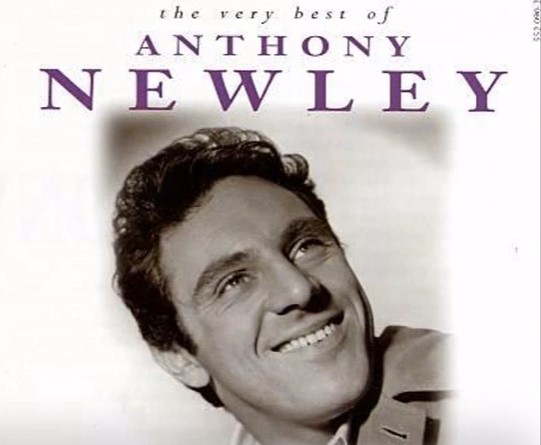
44,667,127 views Oct 20, 2010″Feeling Good” (also known as “Feelin’ Good”) is a song written by Anthony Newley and Leslie Bricusse for the 1964 musical “The Roar Of The Greasepaint—The Smell Of The Crowd” and has since been recorded by many artists, including Muse, Sammy Davis Jr., Bobby Darin, Traffic, Michael Bublé, The Pussycat Dolls, George Michael, John Barrowman, John Coltrane, Toše Proeski, Frank Sinatra Jr., and Adam Lambert. Perhaps the most famous version was recorded by Nina Simone, and first appeared on her 1965 album “I Put A Spell On You”. Simone’s version is also featured in the 1993 film “Point Of No Return”, in which the protagonist uses the code name ‘Nina’ and professes to be a longtime fan of Simone’s music. At least half the soundtrack for the film featured Nina Simone songs. The song was also featured in the promotional video of the TV series “Six Feet Under” (4th season), and is included in the show’s volume 2 soundtrack. Additionally, Simone’s version is also included in the 2006 film, “Last Holiday”, in the 2010 film “Repo Men”, appears as a background track in the 2009 game “The Saboteur” (despite the game taking place in Nazi-occupied Paris, long before the song was made), and is featured in the television series “Chuck” during the third season episode “Chuck Versus The Honeymooners”. Eunice Kathleen Waymon (February 21, 1933 — April 21, 2003), better known by her stage name Nina Simone, was an American singer, songwriter, pianist, arranger, and civil rights activist. Although she disliked being categorized, Simone is most associated with jazz music. Simone originally aspired to become a classical pianist, but her recorded work covers an eclectic variety of musical styles that include classical, jazz, blues, soul, folk, R&B, gospel, and pop. Her vocal style is characterized by intense passion, a loose vibrato, and a slightly androgynous timbre, in part due to her unusually low vocal range which veered between the alto and tenor ranges, occasionally even reaching baritone lows. Also known as ‘The High Priestess Of Soul’, she paid great attention to the musical expression of emotions. Within one album or concert she could fluctuate between exuberant happiness and tragic melancholy. These fluctuations also characterized her own personality and personal life, amplified by bipolar disorder with which she was diagnosed in the mid-1960s, something not widely known until after her death in 2003, though she wrote of it openly in her autobiography published in 1992. According to Nadine Cohodas, Simone’s biographer, Ms. Simone was first diagnosed with multiple personality disorder and later with schizophrenia. Simone recorded over 40 live and studio albums, the greatest body of her work released between 1958, when she made her debut with “Little Girl Blue”, and 1974. Her music and message made a strong and lasting impact on musical culture, illustrated by the numerous contemporary artists who cite her as an important influence. Several hip-hop musicians and other modern artists sample and remix Simone’s rhythms and beats on their tracks. Many of her songs are featured on motion picture soundtracks, as well as in video games, commercials, and TV series. This channel is dedicated to the classic jazz music you’ve loved for years. The smokin’ hot, icy cool jams that still make you tap your feet whenever you hear them . . . Cool Jazz is here!





 Musicaware.co